Ahmadreza Attarpour
AI Scientist | Foundation Models · Agentic AI · Large Biomedical Data

I build end-to-end AI-based pipelines, foundation models, and agentic AI systems for large-scale biomedical data analysis, with the goal of translating cutting-edge ML research into real-world healthcare impact.
I am an AI Scientist at the University Health Network (UHN) and Peter Munk Cardiac Centre AI Team, Toronto, Canada. I completed my Ph.D. in Medical Biophysics at the University of Toronto and Sunnybrook Research Institute, specializing in deep learning for 3D whole-brain analysis of tera-voxel light sheet microscopy data.
My work spans the full ML development lifecycle — from self-supervised pretraining of foundation models on millions of 3D biomedical image patches, to building agentic reasoning pipelines and multimodal vision-language systems for biomedical data analysis. I have experience across a diverse range of modalities including light sheet microscopy, CryoET/CryoEM, histopathology (WSI), echocardiography, MRI/CT, and ECG/biosignals. I have co-authored 10+ peer-reviewed publications including two first-author papers in Nature Methods (one published, one under review), filed 2 patents, and presented at 10+ international conferences.
I am particularly passionate about developing robust, uncertainty-aware, and deployable AI — systems that generalize reliably under distribution shift and real-world noisy conditions.
Featured Work
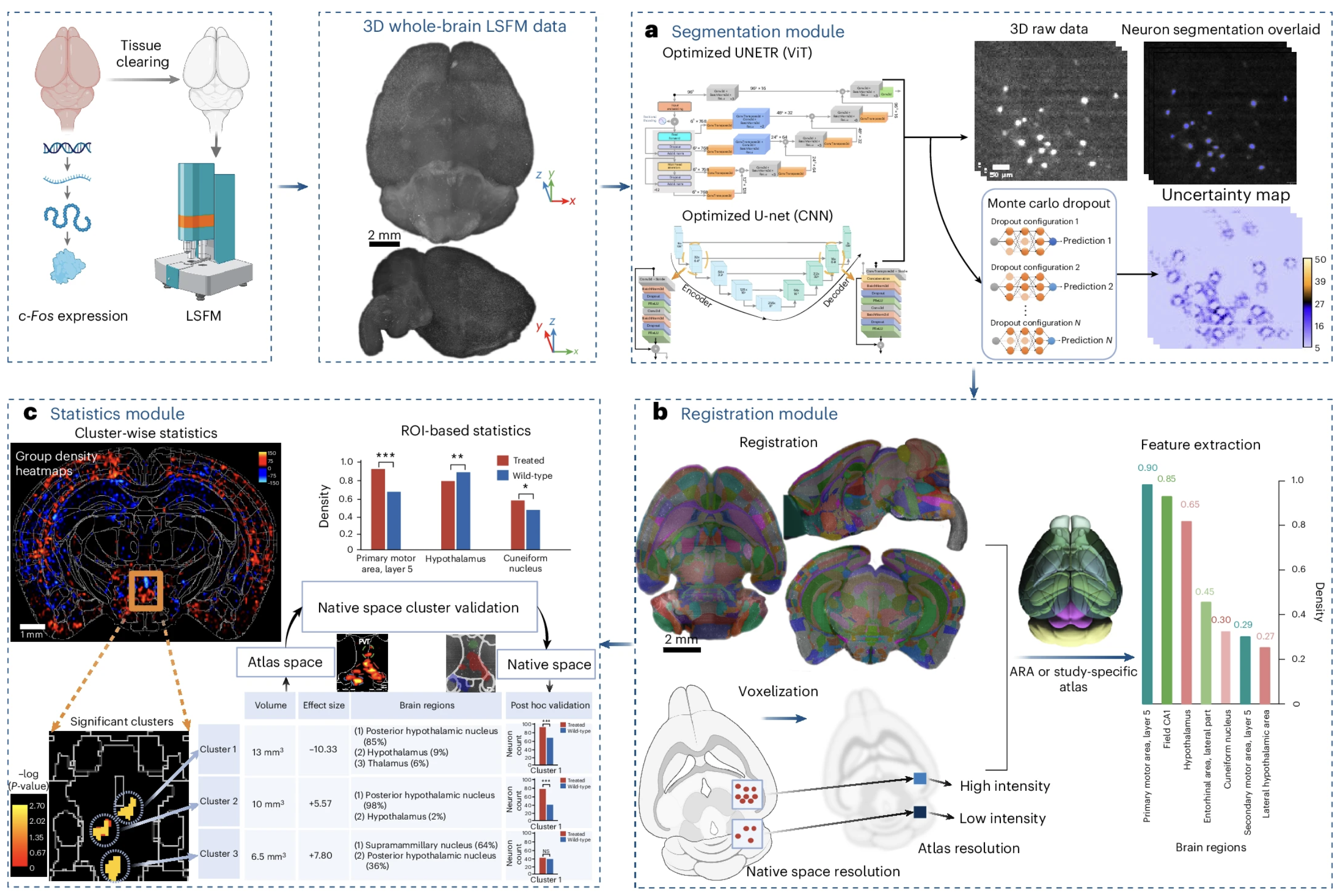
ACE — AI-based Cartography of Ensembles
End-to-end 3D deep learning pipeline for brain-wide mapping of local neuronal ensembles in tera-voxel (~1TB/sample) light sheet microscopy data. Integrates a CNN/ViT ensemble with Monte Carlo dropout for probabilistic uncertainty estimation and cluster-wise permutation statistical analysis. Adopted internationally — used in a Cell (2025) study.
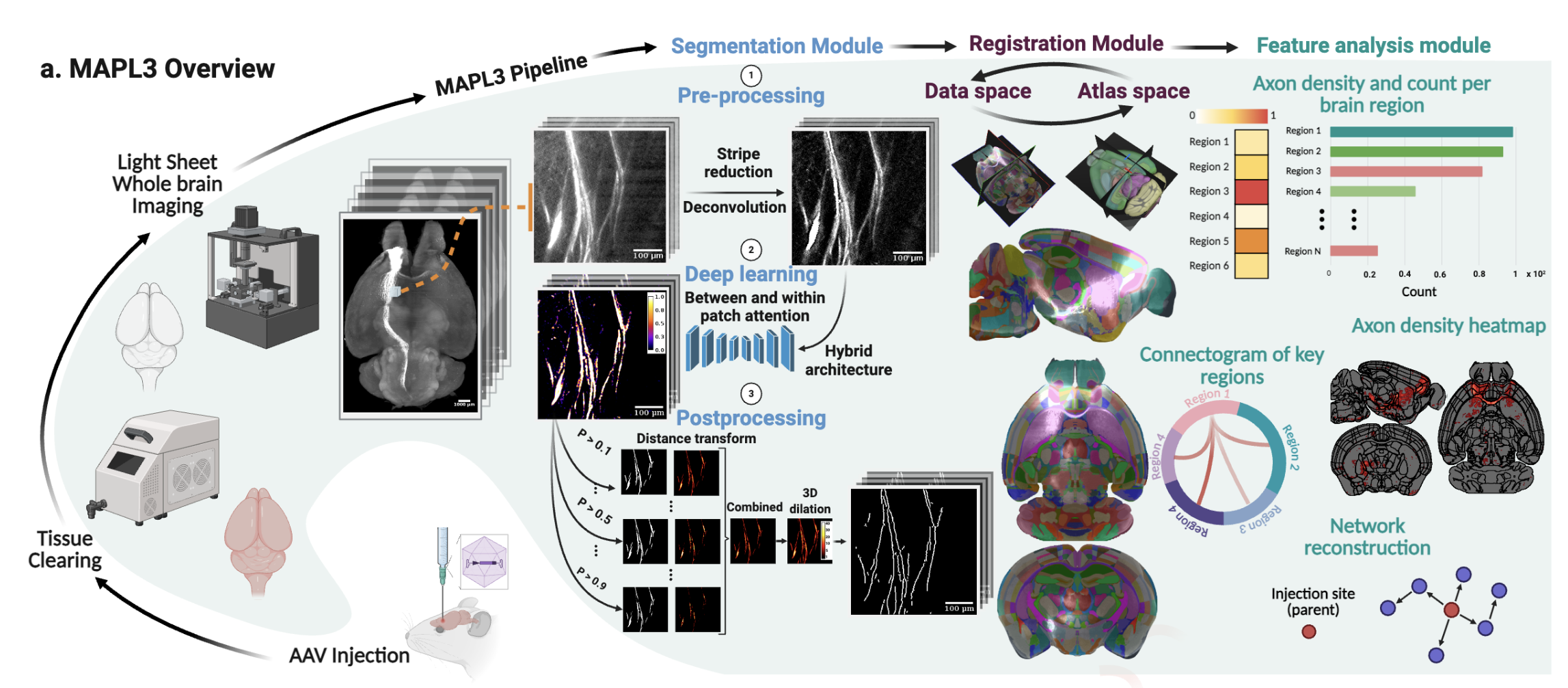
MAPL3 — Mapping Axonal Projection in Light Sheet Microscopy in 3D
3D computational pipeline for brain-wide axonal projection mapping at single-fiber resolution. Combines a novel CNN+ViT architecture with self-supervised learning to quantitatively profile whole-brain connectomes using high-resolution light sheet microscopy.
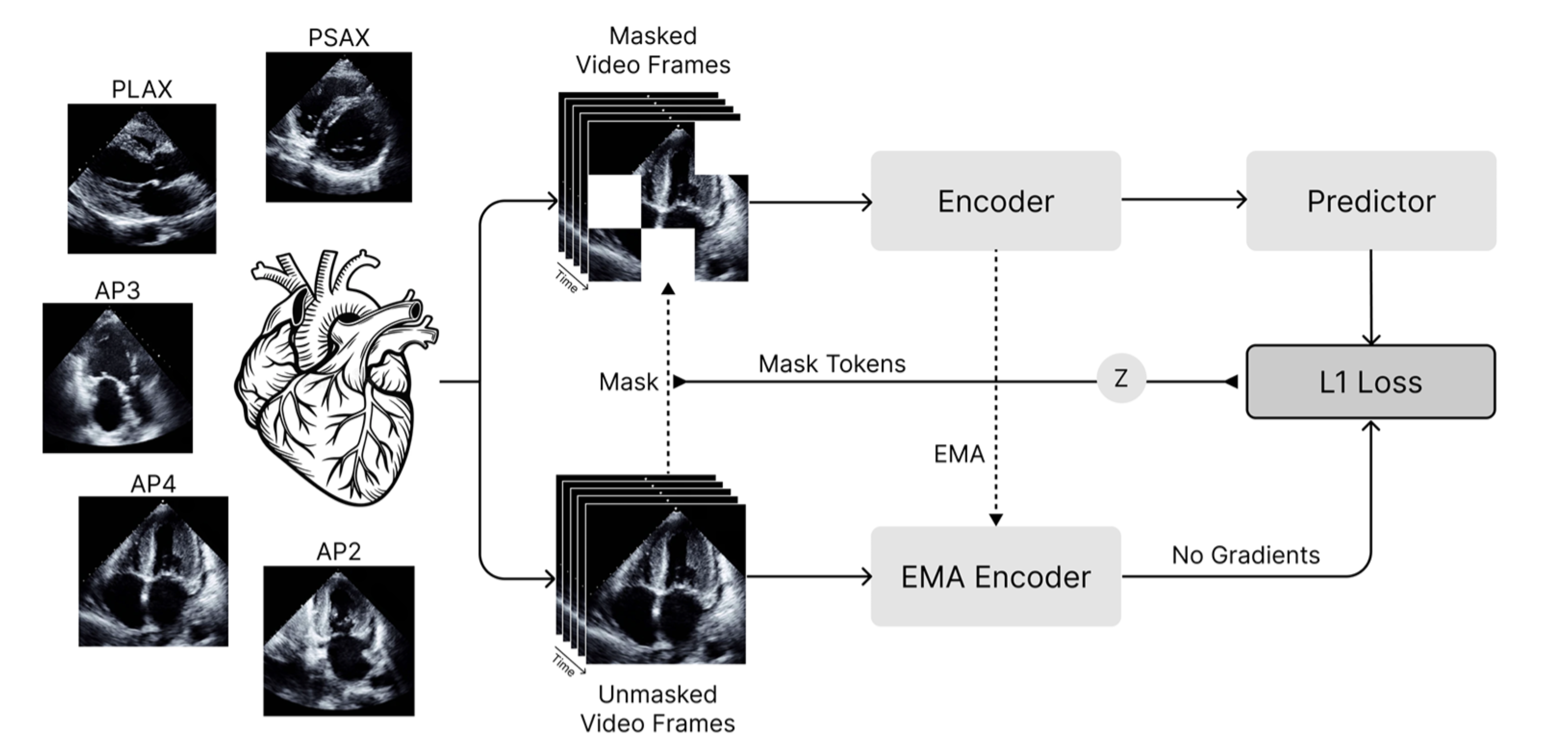
EchoJEPA: A Latent Predictive Foundation Model for Echocardiography
State-of-the-art foundation model for echocardiography pretrained on 18 million videos across 300K patients — the largest pretraining corpus for cardiac imaging to date. Achieves ~20% improvement in LVEF estimation and 78.6% view classification accuracy using only 1% of labeled data.